Ferry Farm Owners
As ealy as 1666, a series of English land speculators owned the Ferry Farm parcel as part of much larger land tracts that were successively broken into smaller tracts. None of the speculators lived at Ferry Farm.
The Clark/Harwood Farmstead
The first documented English settler residing at Ferry Farm was named Morris/Maurice Clark, who was a freeman who fulfilled the terms of his indenture and purchased 150 acres of land on the Virginia frontier in 1710. Clark died six months after gaining title to the land. He made little impact on the historical record, but his impact on the archaeological record is pronounced. At the time of his death, Clark owned two tracts of land - the 150 acres on the Rappahannock (on which he lived) and 75 acres in Stafford County. (Richmond County Will Book 5:40). Clark’s will, which survives today, provides the first details about the colonial settlement of Ferry Farm. Clark’s will lists no wife, children, or enslaved workers, but an indentured servant was living on the property with Clark. Clark also owned livestock and at least two horses. He claimed no title or office and should be considered a small planter.
Ferry Farm reverted to the Northern Neck Proprietary after Clark’s death, which in turn sold it to Thomas Harwood. He first appeared in Richmond County records in 1711. Thenceforth, he was interchangeably referred to by the surnames Howard, Harwar, Harewood and Harwood. It appears that as Harwood operated and expanded the Clark farmstead, he slowly grew in wealth and respectability. He was appointed by the King George County Court to officially count tobacco plants, successfully sued debtors in the courts and was party to the movement to establish the first ferry across the Rappahannock immediately below the site of what would become the town of Fredericksburg. It was Harwood who molded the property into the farm a young George Washington might recognize.
The first phase of the Clark house was a post-in-ground structure that was made up of two rooms, one of which was heated by a fireplace. The house measured 20 ft. by 30 ft. and was made entirely of wood. The heated room also contained a root cellar situated in front of the southern gable end, while the unheated one contained an unlined cellar that was quickly abandoned and filled in.
Harwood renovated the house, moved the fireplace to a central location situated between the two rooms, and moved the root cellar north to re-establish its relationship to the new fireplace and hearth. A small post-in-ground support structure was identified on the north edge of the excavation. Quarry pits or garden beds were also found east of the house. Thousands of domestic artifacts were recovered in and around this farmhouse.
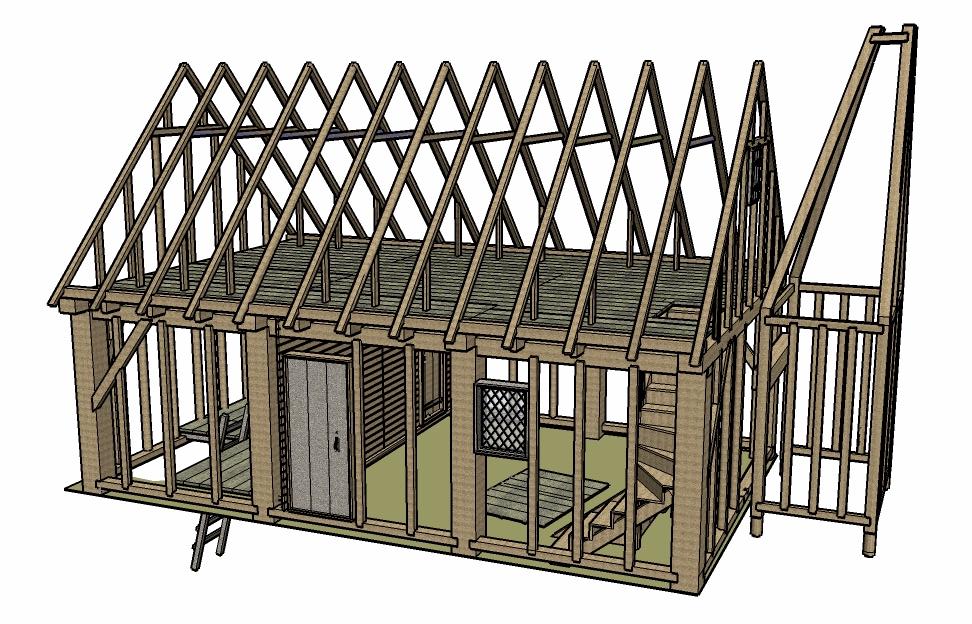
Maurice Clark House, Phase 1 Rendering
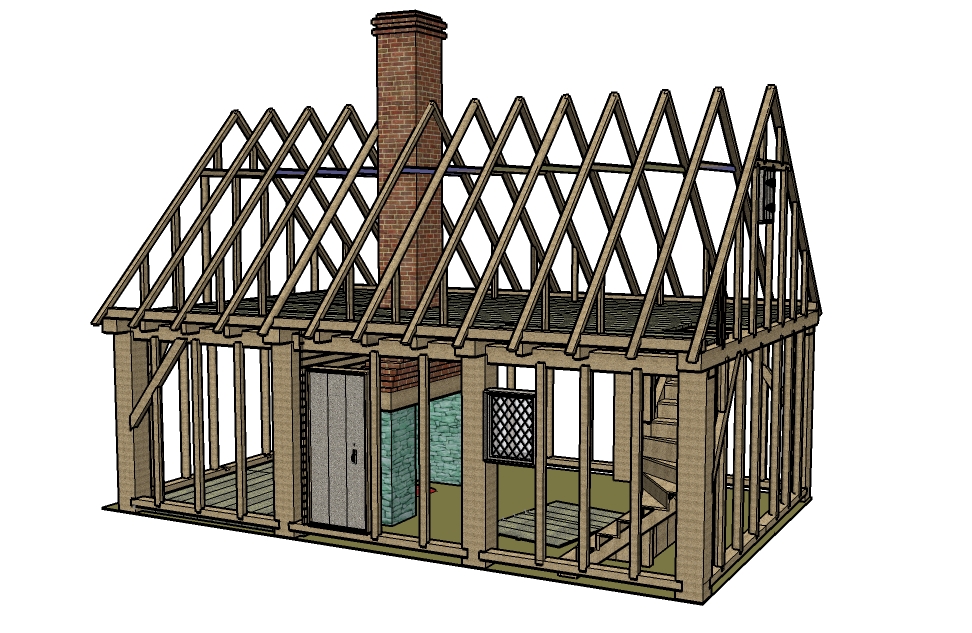
Maurice Clark House, Phase 2 Rendering
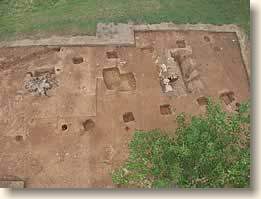
Clark House Excavation
Excavation of Clark house showing post holes and location of central hearth Credit: The George Washington Foundation
William and Margaret Strother Farmstead
In 1727, William Strother IV bought Harwood’s 150-acre farm, and two years later added a nearby 165-acre tract from Alice Cale. Strother was a Burgess for the newly formed King George County. He improved the property with a new dwelling house and several storehouses but died in 1733. Strother’s last will and testament required this property to be sold and the proceeds divided equally between the daughters and widow. The advertisement placed by the Strother estate described the plantation as “a very handsome dwelling house, 3 Store houses, several other convenient Outhouses and a ferry belonging to it.” Strother’s probate inventory details the interior divisions of the house as a hall, parlor, passage, and hall back room.
The Strothers established this house on the slope of the escarpment overseeing the Rappahannock River. Featuring a foundation made of Aquia sandstone, the L-shaped house contained four downstairs rooms and two chimneys featuring bases of Aquia that progressed to brick. A root cellar was situated in the room called the Hall Back.
After William’s death and selling of the estate, Margaret Strother married John Grant and moved to Stafford County. Margaret died sometime around 1755.
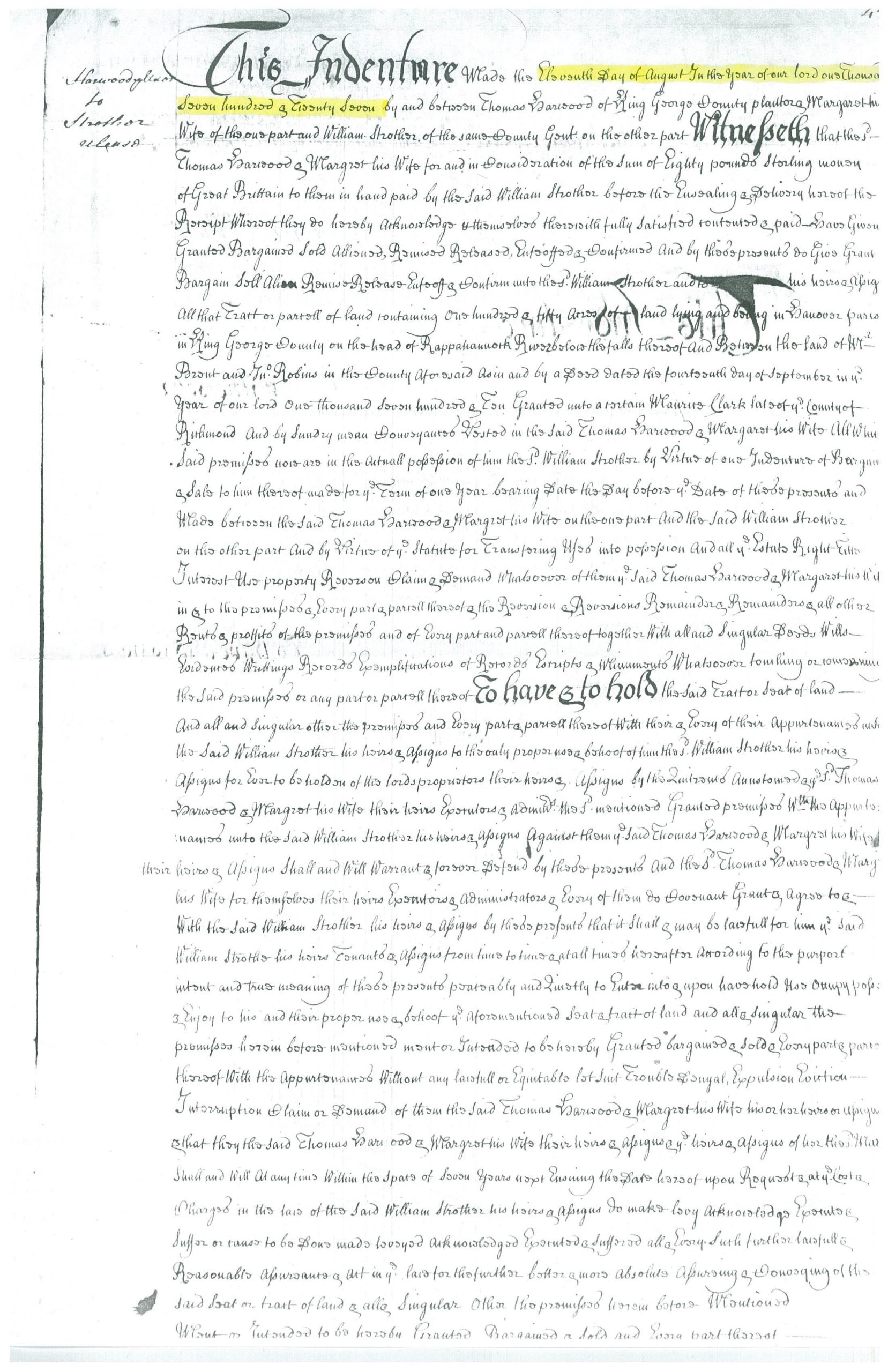
Harwood to Strother Deed
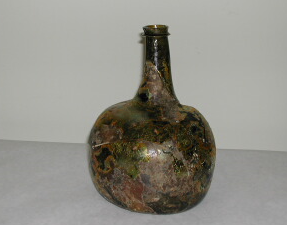
Wine Bottle
Dated to the period when the Strothers were living at Ferry Farm. Credit: The George Washington Foundation
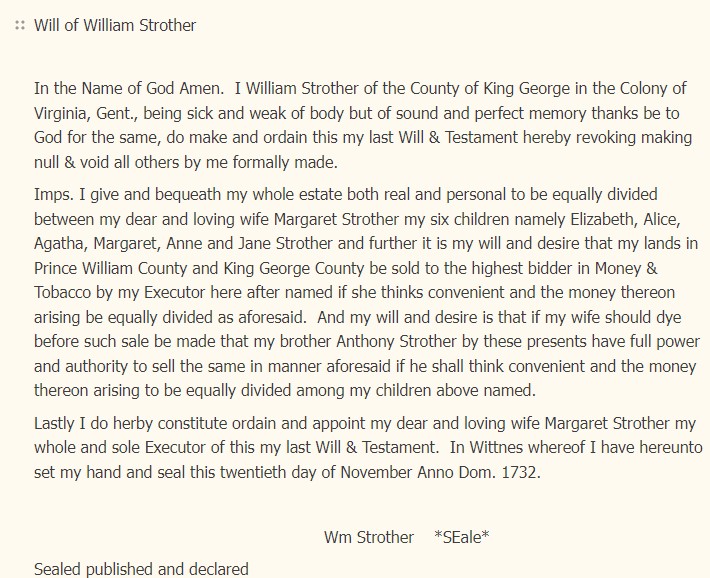
Transcription of Strother’s Will
Augustine and Mary Washington Farmstead
Augustine Washington and his family purchased Ferry Farm from the Strother estate in 1738 and moved his family from Little Hunting Creek (later named Mt. Vernon) in December of that year.
As a young man, Augustine Washington Sr. (1694-1743) attended the Appleby School in England; a school that predominantly educated merchant’s sons. He returned to Virginia and by 1715 had married Jane Butler (1699- 1729). They produced four children of which only two sons survived to adulthood - Lawrence (1718-1752) and Augustine Jr. (ca.1720 – 1762). A daughter named Jane was born in 1722 and lived until 1735, surviving her mother by six years. The family lived at their Bridge’s Creek plantation in Westmoreland County, Virginia. Lawrence and Augustine Jr. were sent to attend school at Augustine Sr.’s alma mater Appleby in 1729. Jane (mother) died in November of that year, while Augustine Sr. was in England.
In 1731, Augustine Sr. married 23-year-old Mary Ball and eventually had six children with her. Augustine’s daughter Jane would have been old enough to help Mary with her new duties. The couple’s oldest son George was born on February 22, 1732, at the family’s Westmoreland plantation. By 1735, when the family moved to Little Hunting Creek, George had two siblings – Betty (1733 -1797) and Samuel (1734-1781). George’s little brother John Augustine was born at Little Hunting Creek plantation in 1736.
While prominent in county affairs, Augustine never reached the highest level of distinction in Virginia society. He was appointed to the vestry of the Anglican Church in Truro Parish, served as a Justice for the Peace, the County Sheriff in Westmoreland County, Va, and held the title of Captain in the local militia.
The Washingtons renovated the Strother House after a chimney fire broke out in the Hall Back Room. A room and a porch were added to the back of the building resulting in a rectangular configuration. A shed roof was added across the back as well. After the renovations, the house measured 52 ft by 28 ft. In the surrounding landscape, archaeologists have identified the remains of a kitchen structure, the Assistant Cook’s work area, a smokehouse, an enslaved family’s living quarter, a cellar house, and a corncrib to date. Thousands of architectural and domestic artifacts have been recovered by Ferry Farm archaeologists. Of particular interest are cowry shells and a carnelian bead which are tied to the Middle Passage, the forced sea voyage Atlantic slave traders used to transport captured Africans across the Atlantic Ocean to the New World. Artifacts also document the daily lives of the enslaved men, women, and children who undertook the domestic work associated with the Washington house. Domestic artifacts show how Mary Washington dealt with the consequences of Augustine’s death and the aspects of his will which transferred most of the family’s assets to Augustine’s sons from his first marriage. Using a variety of strategies, Mary was able to reinforce the family’s gentry status and successfully raised her children as part of the gentry class despite the financial hardships and those created by her choosing to remain a widow.
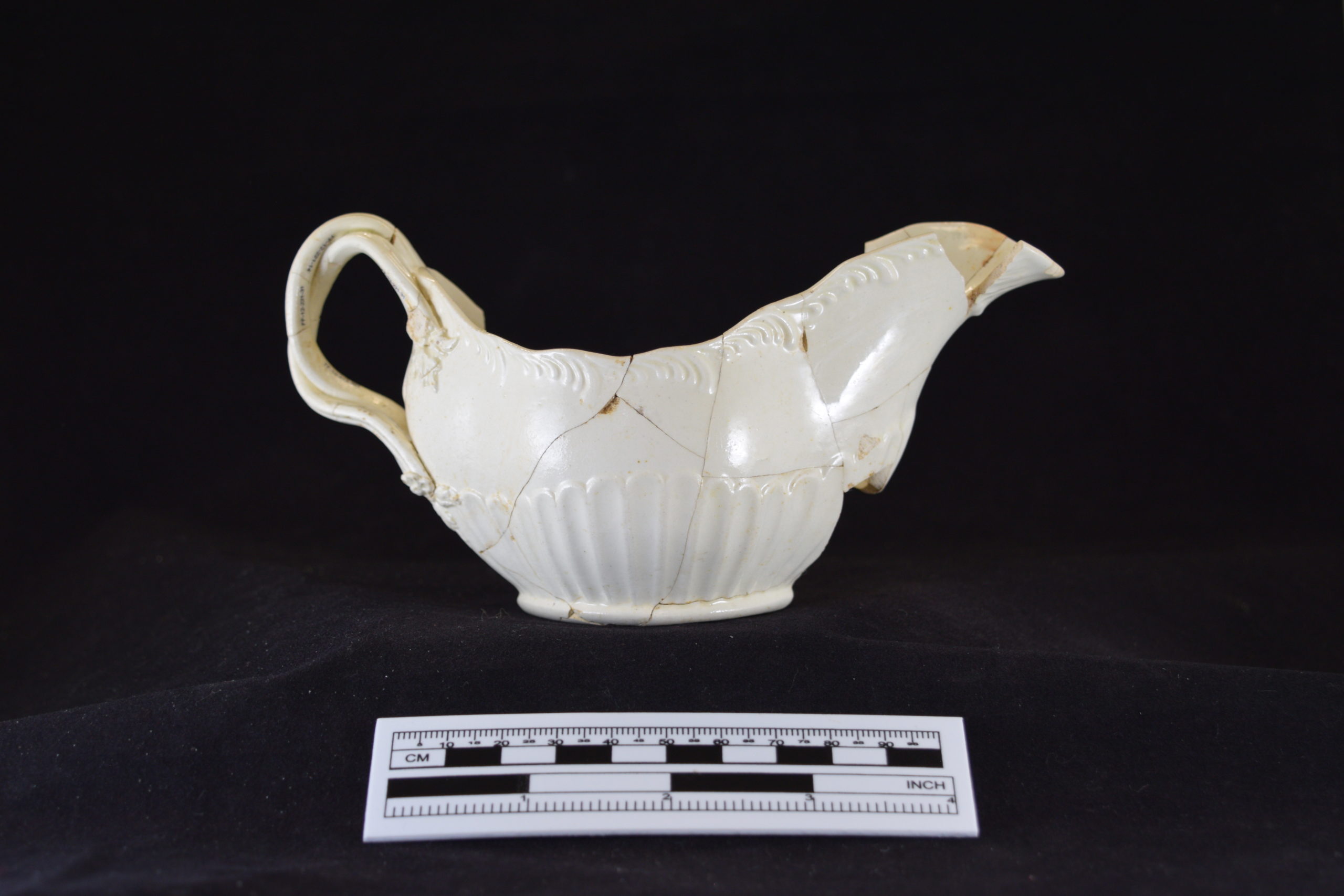
Creamware Sauceboat from Mary Washington Time Period
Credit: The George Washington Foundation
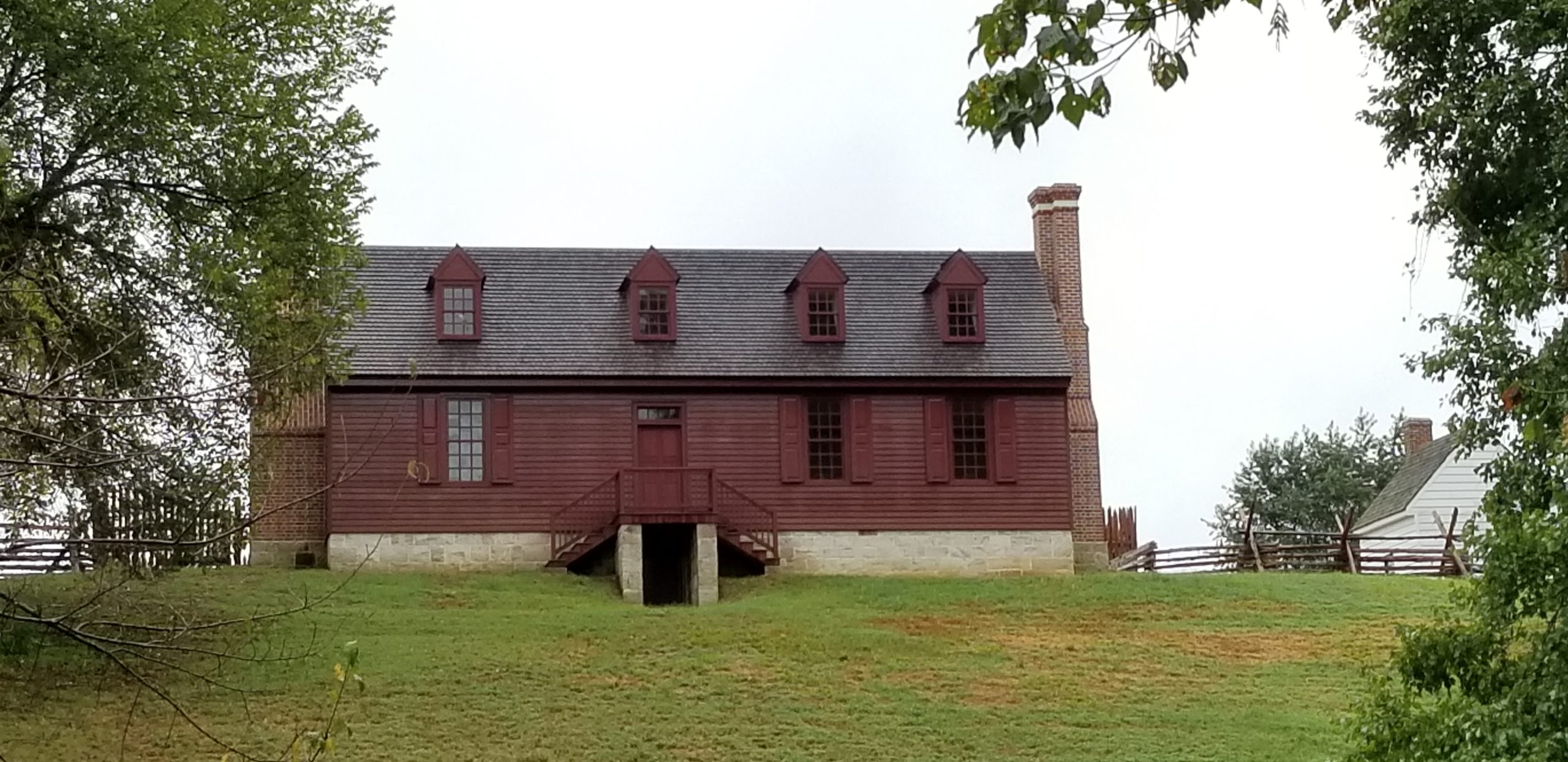
Reconstructed Washington House
Credit: The George Washington Foundation
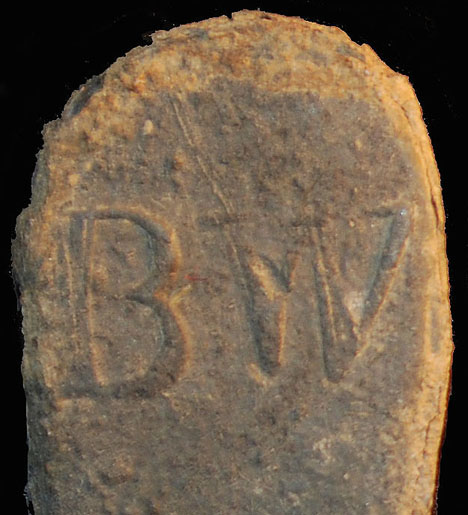
Teaspoon With Betty Washington Initials
Credit: The George Washington Foundation
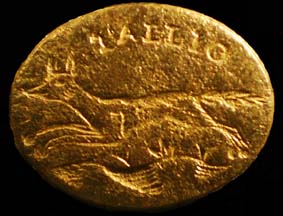
Tallio Cufflink
Credit: The George Washington Foundation
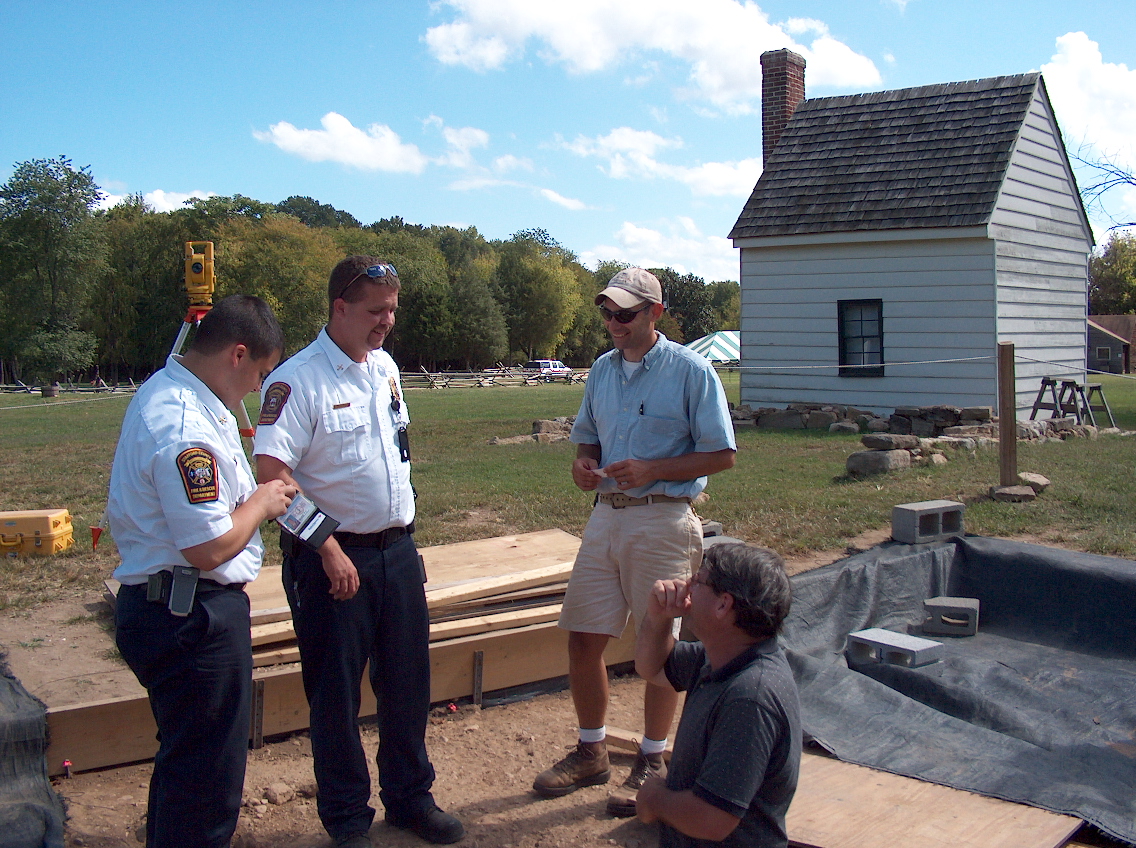
Fire Marshals Investigation Remains of Colonial Era Washington House Fire
Credit: The George Washington Foundation
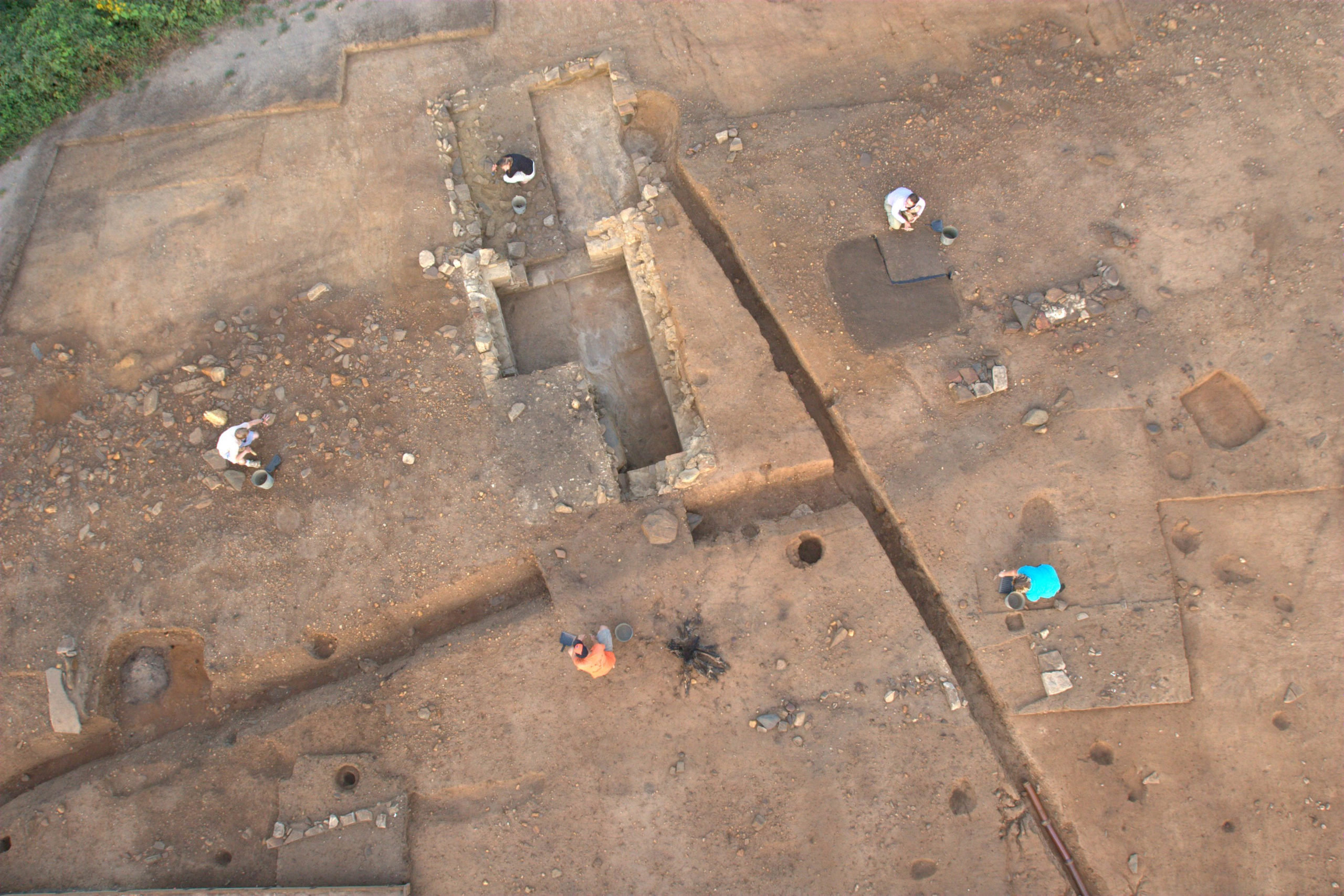
Excavation of Washington House
Credit: The George Washington Foundation
Hugh Mercer Farmstead
George Washington advertised the sale of Ferry Farm in 1772, when his mother moved into a small house situated near Kenmore, in the town of Fredericksburg. The buyer was Hugh Mercer, a General in the Continental Army. Mercer and his family lived in Fredericksburg. He died at the Battle of Princeton in 1777, and his estate took control of the property. The Mercer family rented out the house, ferry, and land until 1830.
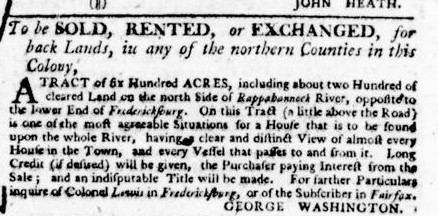
Washington’s Ad Selling Ferry Farm – 1772
Virginia Gazette Purdie and Dixon: Nov. 05, 1772 – pg. 4
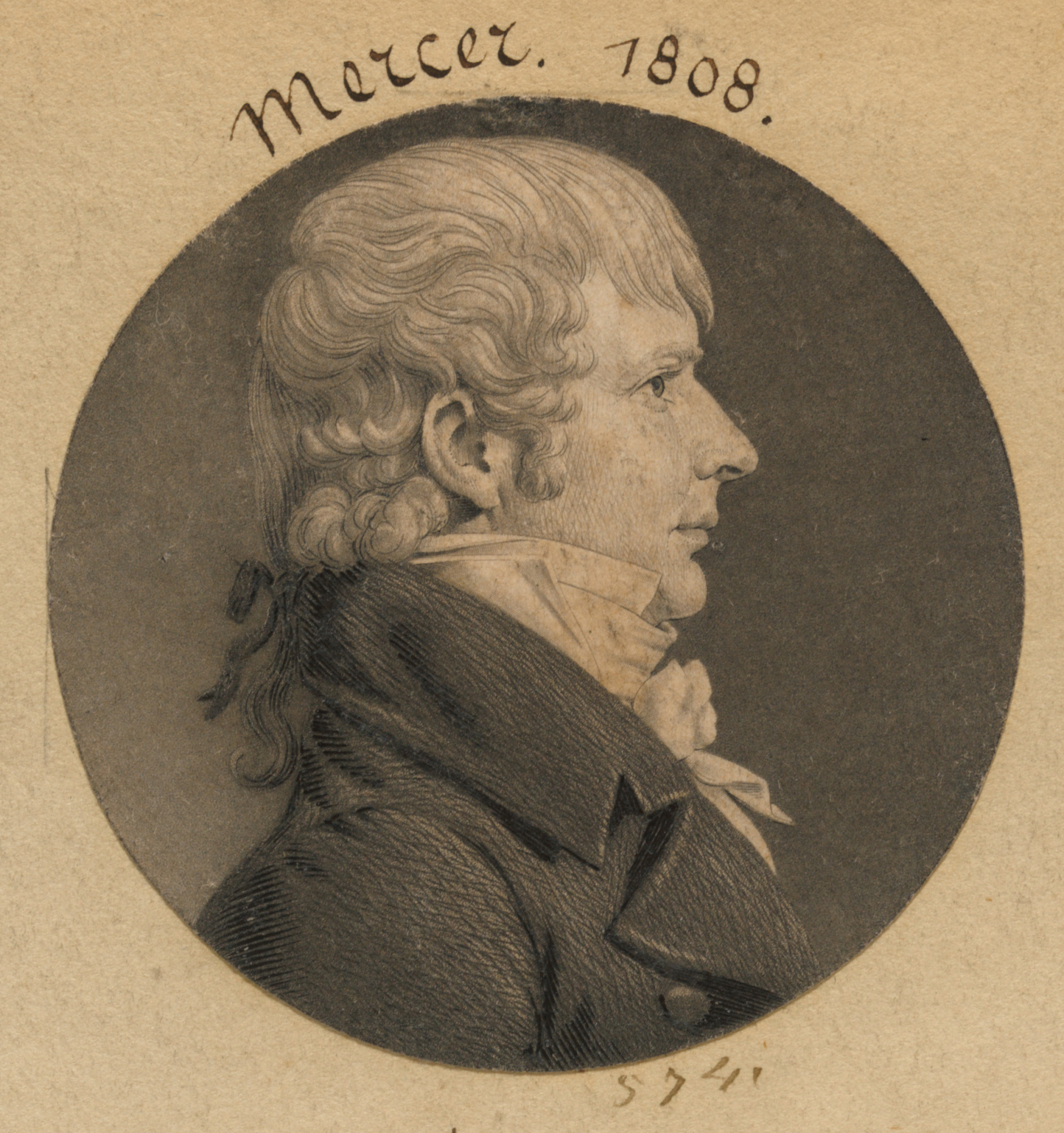
Portrait of Hugh Mercer
National Portrait Gallery, Smithsonian Institution; gift of Mr. and Mrs. Paul Mellon
John Coalter Farm
When Judge John Coalter purchased the property in 1830, the Washington house was in terrible shape. By 1833, the house had completely collapsed leaving only stone ruins present when John Gadsby Chapman painted the Ferry Farm landscape. The various outbuildings that stood during the Washington period had also largely disappeared by the nineteenth century. The property was operated as an absentee owned farm.
Mann and Teasdale Farm
Coalter died in 1838, and the property was sold to business partners Joseph Mann and John Teasdale, who lived in Fredericksburg. They operated Ferry Farm as an absentee owned farm, using enslaved laborers to grow broom straw and broom corn seed.
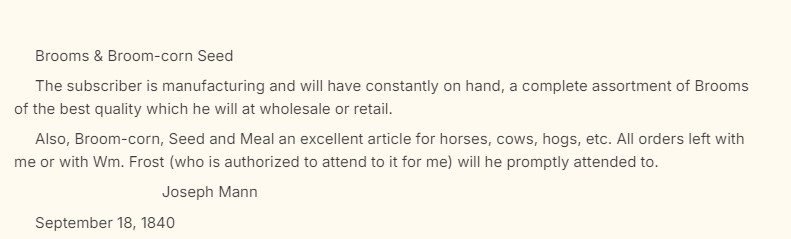
Transcription of Ad for Broom and Straw Seed at Ferry Farm
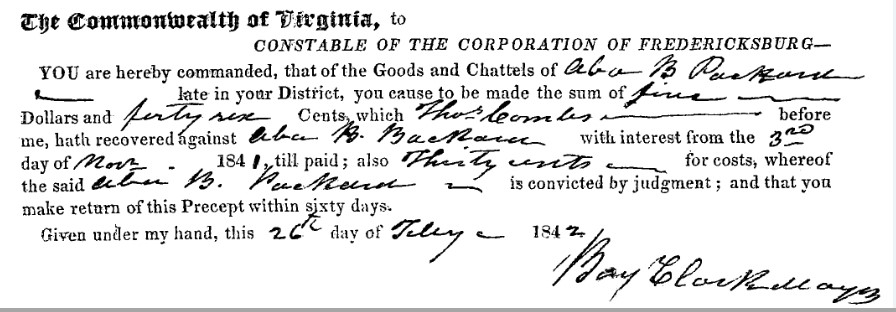
Report Involving Abra Packard – Ferry Farm Overseer
Winter Bray Farmstead
In 1846, Winter Bray purchased Ferry Farm for $4000. He and his family lived at the Hazel Hill Estate just outside the town of Fredericksburg and never lived at Ferry Farm. He slowly improved the farm by constructing an overseer’s house, kitchen building, slave quarters, and a distinctive barn. He, and later his estate, employed a series of overseers that included William S. Bullock (1850), Wyatt B. Webb (1852), A.B. Packard (1853), J.W. Bullock (1854), Charles W. Brewer (1855-58), and John W. Smithers (1860-2). Bray died in 1852, and his estate continued to run the farm until 1862. In the Spring of 1862 during the American Civil War, soldiers reported that Smithers lived with an enslaved women who they called his “wife” and their children. Once Union forces took control of Fredericksburg, Ferry Farm’s enslaved community walked away from the property in the hope of securing their freedom. Later in the Fall of 1862, Union Soldiers tore down the standing structures as part of the Battle of Fredericksburg.
Archaeologists have excavated the remains of the Overseer house and kitchen. They have also excavated a defensive fortification that runs parallel to the river and would have provided cover from snipers situated in Fredericksburg. Artifacts relating to the war include mostly camp items including pen nibs, inkwells, buttons and insignias including regiment numbers. The domestic refuse of the enslaved workers has also been recovered.
Carson Farmstead
Ferry Farm remained unoccupied until the Bray estate began selling it off in pieces. The major purchase came in 1872 when Jane Carson (Corson) purchased the remaining property and deeded it to her husband, John. They filled in the trenches, cleaned up debris, and built a new farmhouse that stood into the 20th century.
Archaeologists have excavated a portion of this house, uncovering sections of a River cobble foundation. Domestic and farming artifacts belonging to the Corsons have been recovered.
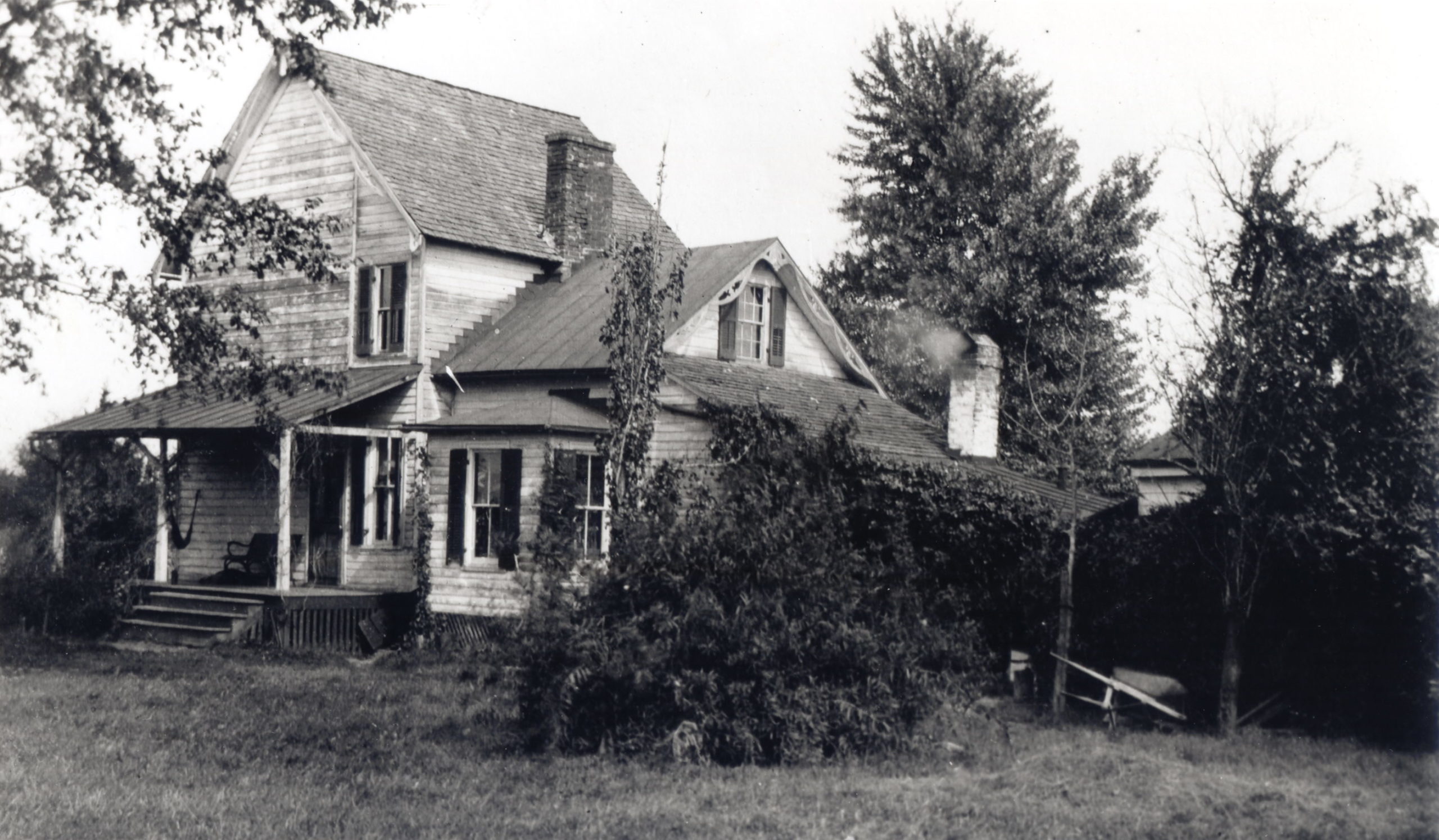
Carson House 1906
Carson House in its original location
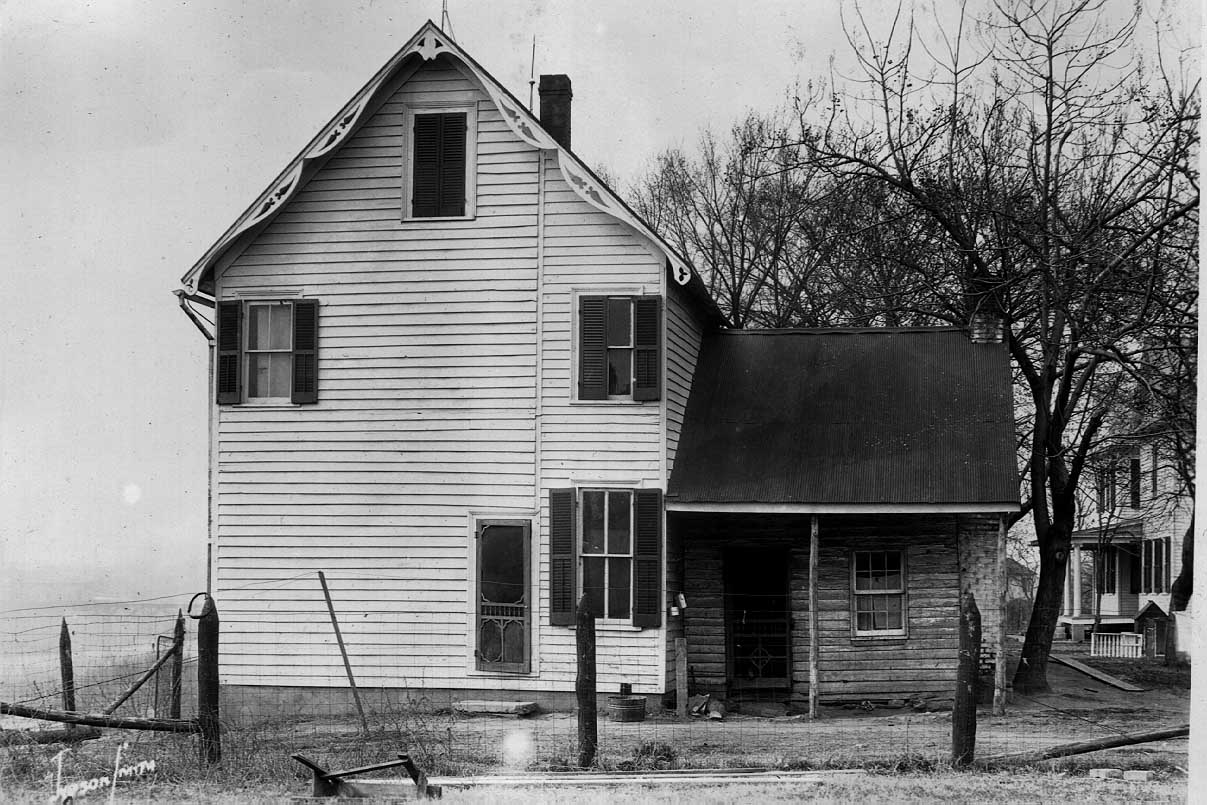
Carson House 1917
Carson house after moving next to Surveyor Shed Credit: Fredericksburg Area Museum
Colbert Farmstead
By 1900, James Colbert owned the property. A local businessman, Colbert moved the Corson house and built a large farmhouse in its place. Colbert also built many farm buildings to support his growing enterprises. The farmhouse burned in the 1990s and the outbuildings torn down.
Archaeologists have uncovered a major portion of this farmhouse recovering domestic artifacts from the Colbert's and their subsequent renters.
Archaeological excavations continue at Ferry Farm in anticipation of finding the remains of domestic, agricultural, livestock-related, and commercial buildings. When the excavation is complete, Ferry Farm will look like a small village made up of rebuilt structures situated in a landscape that George Washington would recognize.
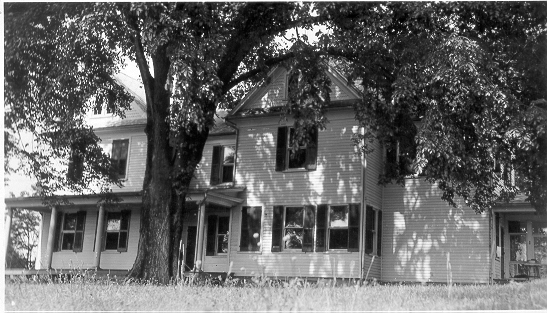
Colbert House
Credit: Fredericksburg Area Museum