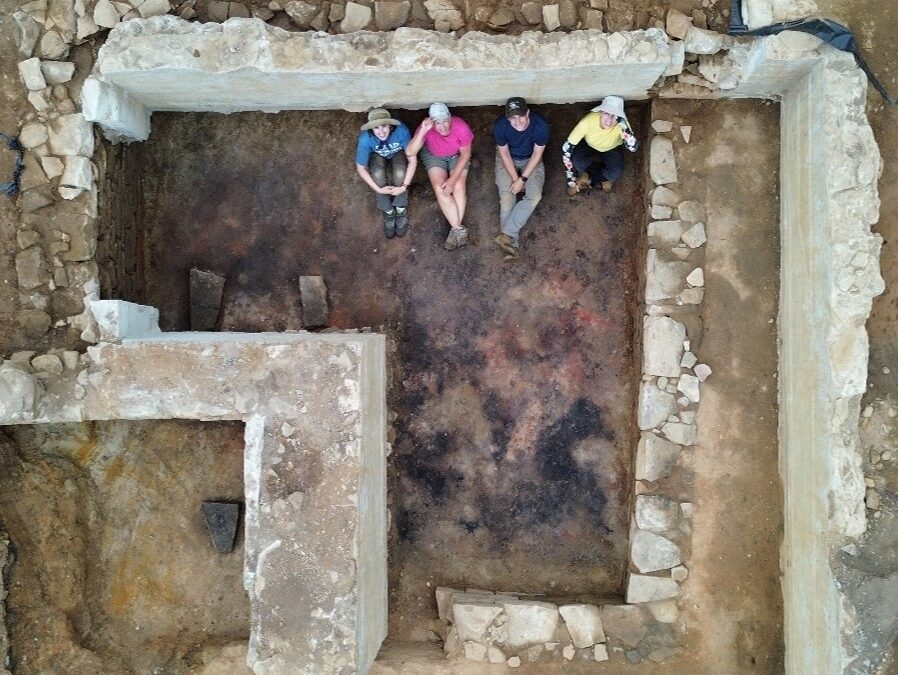
This year marks the end of an era! After four years of digging, the excavation of Ferry Farm’s eighteenth-century kitchen cellar site has finally been completed! This outbuilding, consisting of a 16-foot-square Aquia stone foundation with a full cellar below ground, burned down in the 1740s, was backfilled with destruction debris, then covered over and abandoned during the remaining colonial period. Its presence was brought to light in 1876 when a farmhouse was built on top of it. Since then, it has been the subject of various investigations, limited in scope, ending in the late 1990s when the entire site was backfilled. Our current work has uncovered a lot of exciting information about the outbuilding, as well as some truly incredible finds. But first, a brief recap of the past few years of digging is in order.
2023: Our first year was a small exploratory excavation during which we located the site of the eighteenth-century kitchen cellar as well as the 1876 and 1914 house cellar foundations that both overlie and surround it. All three cellars had been backfilled with sand in the late 1990s, and grass had grown over the site, effectively hiding them from everyday view for many years. Although we exposed only a very small section of the site, the excavation provided us with a better understanding of the scope of work needed to uncover and investigate the entire site, which lay below three to six feet of fill. A decision was made to suspend our excavations of another colonial outbuilding to concentrate on the kitchen in 2024
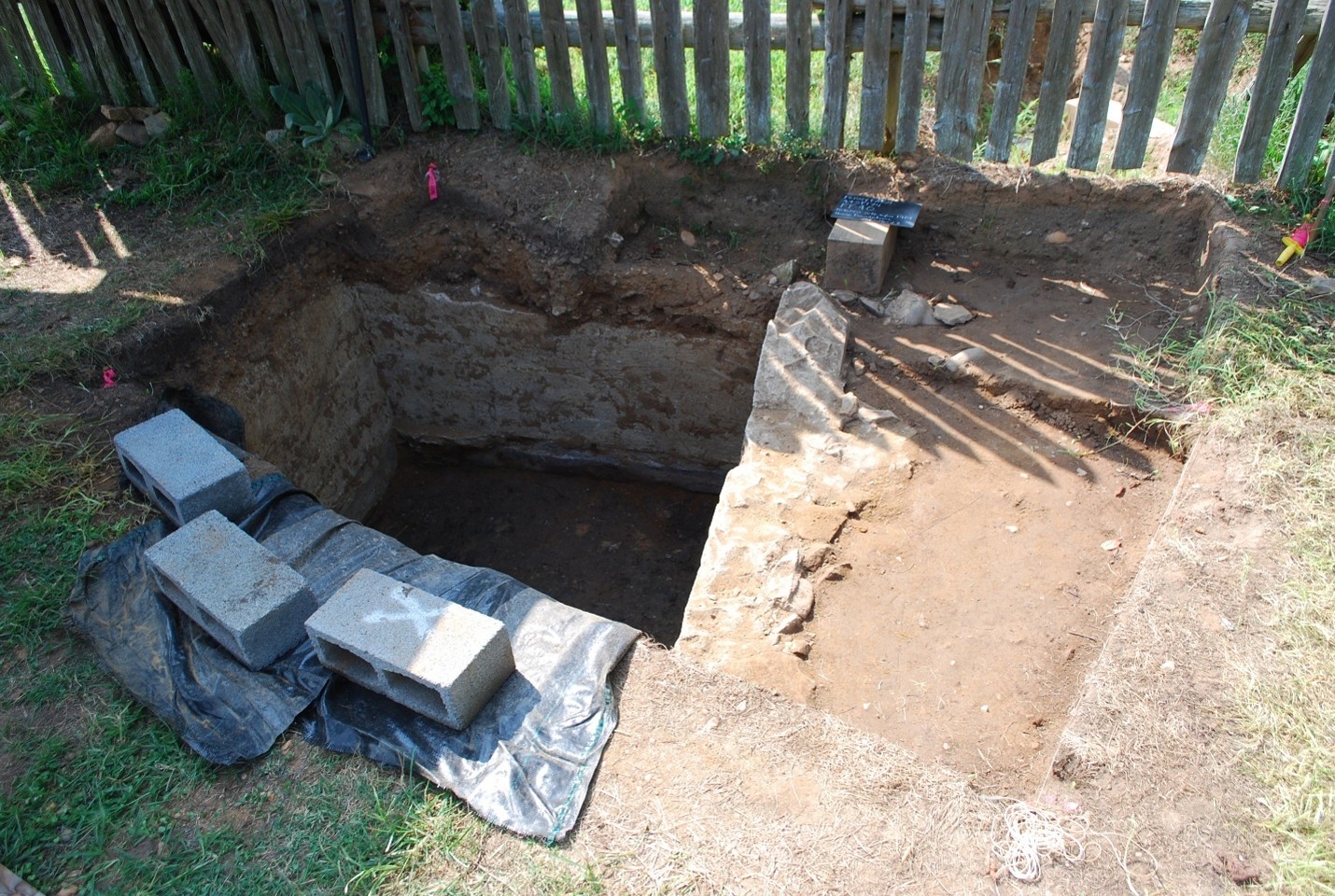
SW Quad of kitchen uncovered in 2023
2024: This excavation season was spent working full time on the eighteenth-century kitchen site. Excavation units previously dug in the 1990s were opened again, exposing the south wall of the kitchen foundation and the foundations of the nineteenth- and twentieth-century farmhouses that were built right on top of it. The kitchen’s western foundation wall, which was thought to have been destroyed by the construction of the 1914 house, was surprisingly found to be intact! (Turns out it was hidden below a twentieth-century utility pipe trench and tucked up next to a concrete wall.) A good portion of this season also focused on exploring the area surrounding the kitchen in the hope of locating features or architectural elements related to the kitchen outbuilding. By the end of the season, we had opened up 27 5’x5’units.
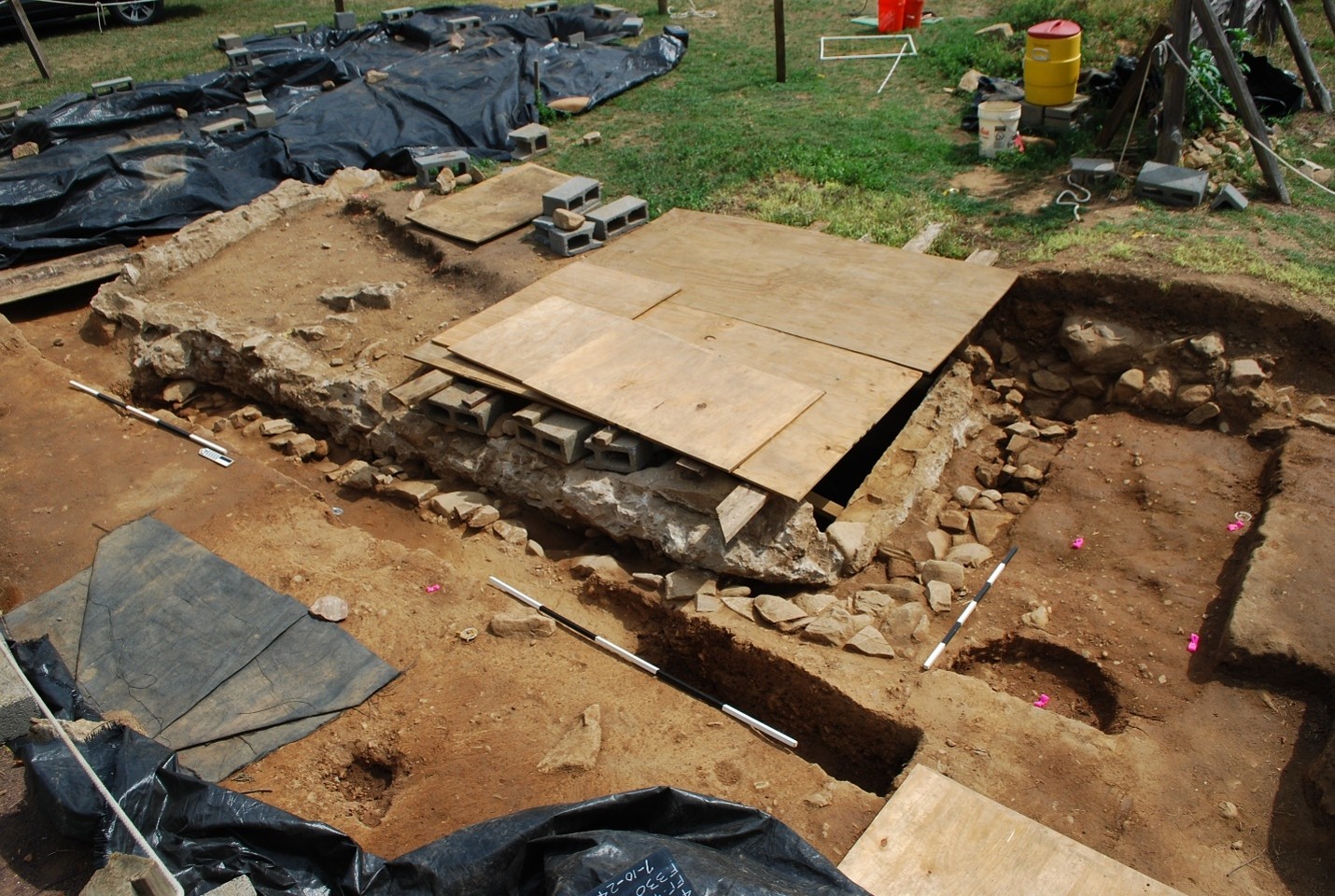
West and south walls of kitchen cellar exposed along with the concrete 20th century foundation and 19th century cobble foundation in 2024
2025: This year started with the removal of the protective layer of sand that covered the colonial kitchen foundation and its unexcavated fill located within the cellar space of the 1914 farmhouse. The cellar fill was divided into four quadrants for organizational purposes. One quadrant (southeast) had previously been dug in the 1990s. Our team excavated the northeast and southwest quadrants, leaving the fourth for the following year. Sifting the cellar fill brought up thousands of awesome artifacts, while work also continued in the units surrounding the kitchen.
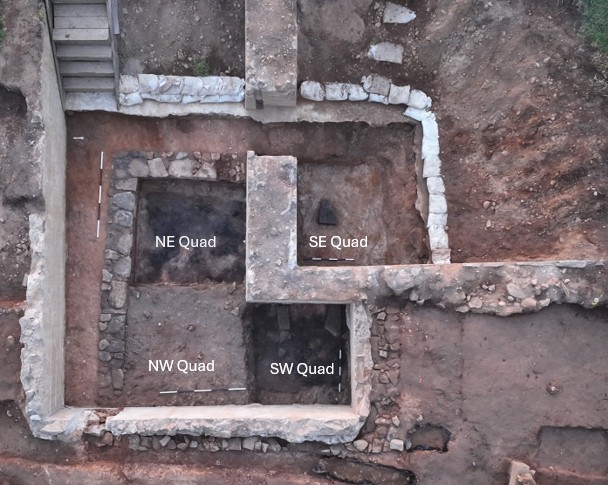
Kitchen cellar after excavation of NE and SW quads in 2025
2026: Over this final 2026 season we were able to finish the excavation of the cellar fill by excavating the final northwest quadrant and doing final touches on the other quadrants. We also wrapped up the excavation outside of the cellar which covered 36 5’x5’ units. Much like last season, we found some amazing artifacts.
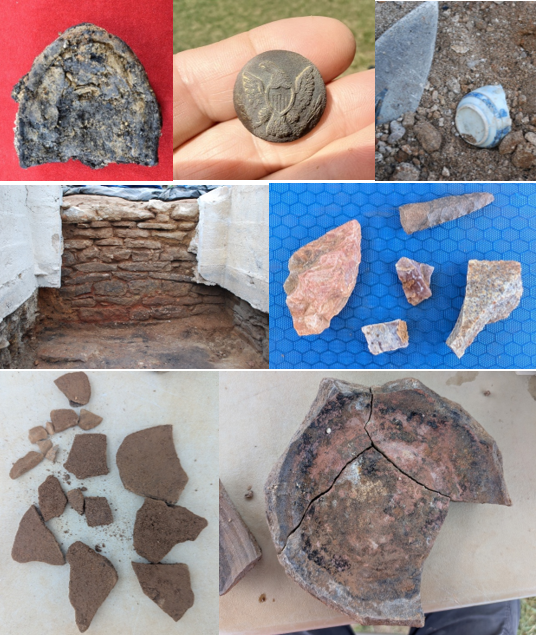
Some artifacts from inside the cellar and around the site. Top left: leather shoe heel, Top middle: Civil War button, Top right: chocolate cup. Middle left: cellar’s south wall exposed after concrete removal, Middle right: lithics including a rhyolite drill tip. Bottom left: prehistoric pottery, Bottom right: stoneware base.
We have been peppered with questions asking how we know we are really done excavating the cellar. We consider an area done when we have dug to a layer where no more artifacts are being found. The same is true for the kitchen cellar. We have now reached a point where all that remains is the burnt sandy subsoil that would have made up the floor of the cellar while it was in use. Outside of the kitchen itself, we have excavated down to a layer that has no cultural interaction or artifacts, leaving only sterile subsoil.
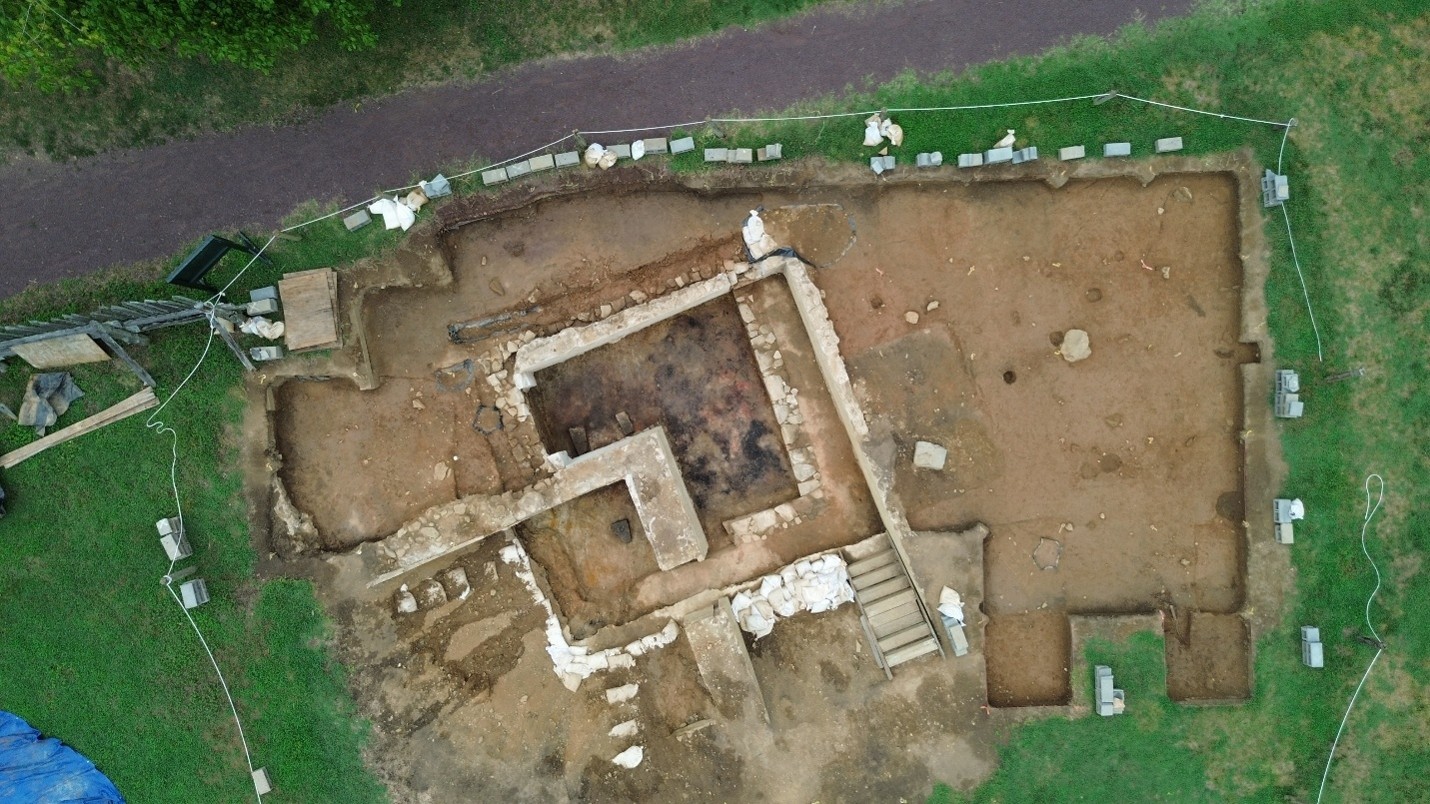
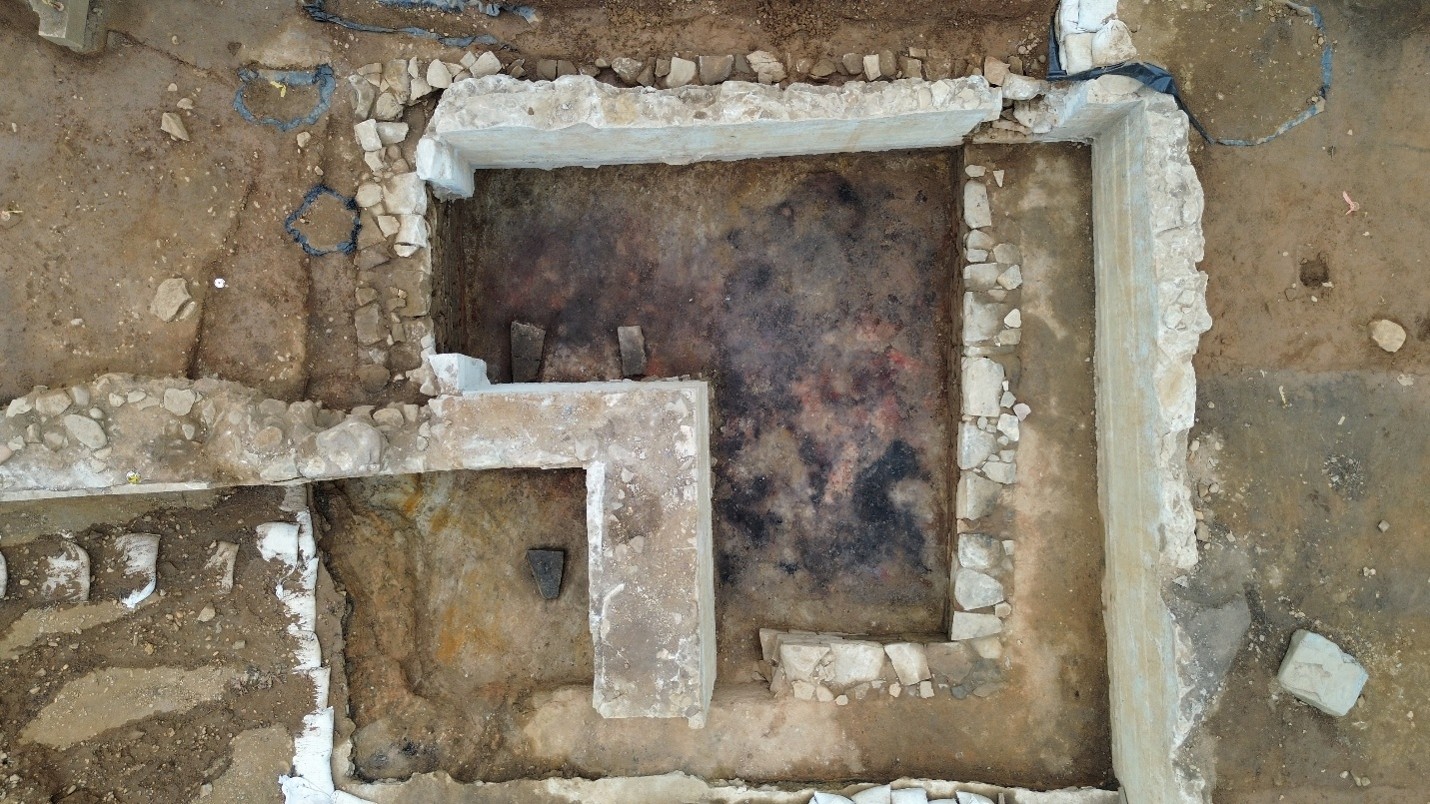
Top: aerial photo of entire project area after four years of excavation. Bottom: Kitchen cellar after full excavation.
So, what is next? Well, when it comes to the kitchen, we have thousands of artifacts to process, research and analyze to help us get a better understanding of the building, its use over time, and the material culture of the people who lived and worked here. We are also spending a lot of effort researching the architectural elements of our burgeoning artifact collection to aid in our eventual reconstruction of the building. Some of the most exciting pieces of the puzzle are waiting for us to put them back together, so be sure to stay tuned as we continue to learn more!
Danielle Arens & Judy Jobrack
GWF Field Directors
Thanks for your detailed explanation! Most interested in this historic site!